Ultimate Guide to Noise-Reducing Earplugs: From Industrial Safety to Daily Quiet – How to Scientifically Choose Your "Hearing Insurance"?
Introduction: When 85 Decibels Become a Silent Killer – Are Your Earplugs Truly Protecting You?
WHO reports that 1.1 billion young people worldwide risk hearing loss from noise exposure, with 37% of occupational deafness caused by industrial noise. Basic earplugs aren’t just survival gear for construction sites – they’re essential for urbanites battling subway roars and office chatter. This guide decodes earplug technology, from acoustics to ergonomics.
Section 1: Critical Data – 4 Statistics That Define Hearing Protection Limits
-
Noise Exposure Thresholds
-
OSHA mandate: ≥85 dB daily noise (equivalent to heavy traffic) requires hearing protection
-
Case Study: Auto plant worker lost 25 dB hearing permanently after 3 years at 98 dB without earplugs
-
-
The Reality of Noise Reduction Ratings
-
Lab tests: NRR 32 earplugs only reduce ~20 dB in real use (due to fit issues)
-
Compliance: EN 352-2 requires ≥15 dB attenuation across 125Hz-8kHz
-
-
The Cost of Improper Use
-
NIOSH findings: Poor insertion reduces protection by 60%
-
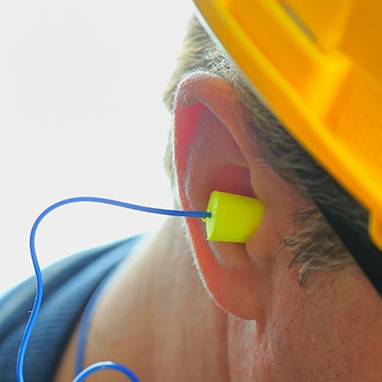
Proper fit: ≤1/3 of earplug should remain visible after expansion
-
Section 2: Anatomy of Earplugs – Material Science vs. Acoustic Engineering
1. Material Evolution
-
Memory Foam: 3-5s expansion (3M™ E-A-Rsoft™ takes 7s)
-
Silicone: Reusable but 5dB weaker at 100Hz vs foam
-
Advanced TPE: Balances softness/durability (-20°C to 120°C)
2. Rating Systems Demystified
-
NRR (US): Actual reduction = (NRR×0.5)+7
-
SNR (EU): Single-value system (e.g., SNR 37 ≈ 37dB reduction)
-
Key Difference: NRR emphasizes high frequencies
3. Ergonomic Breakthroughs
-
Tapered Design: 9-14mm diameters (Asian avg: 12.3mm)
-
Ventilation Tech: Reduces ear pressure (43% comfort boost)
Section 3: Global Certification Standards (With Comparison Table)
| Standard | Testing Protocol | Application |
|---|---|---|
| ANSI S3.19 | 16-frequency tests with simulated ear canals | North American industrial |
| EN 352-2 | Mandatory SNR labeling | EU general use |
| AS/NZS 1270 | Added 40°C/90%RH endurance testing | Australian harsh environments |
Compliance Alert: OSHA fines reach $14,502 per violation for non-compliant earplugs
Section 4: 5-Step Buying Guide
-
Scenario-Based Selection
-
Construction (105dB): NRR≥33 / SNR≥37
-
Office (65dB): SNR 20-25 comfort models
-
Formula: Required rating = Ambient noise - 85dB + 3dB buffer
-
-
Fit Validation
-
Ear canal measurement: Use sizing tools or 3D apps
-
Pressure test: No ear redness after 1 hour
-
Frequency needs: Silicone for bass, foam for treble
-
-
Specialized Solutions
-
Oily environments: Oil-resistant coatings (Moldex® SparkPlugs®)
-
Musicians: <15dB low-frequency attenuation
-
Section 5: 2023’s Top Innovations
-
Smart Adaptive Earplugs
-
Honeywell Howard Leight™ Sync: Bluetooth-adjusted attenuation
-
Market forecast: 28% smart earplug share by 2025 (Grand View Research)
-
-
Biodegradable Materials
-
DuPont™ Sorona®: Decomposes in 18 months
-
-
3D-Printed Customization
-
Ohropax® iFit: 91% better fit via ear canal scans
-
Section 6: Deadly Myths – How 90% Users Harm Their Hearing
-
Myth: "Maximum noise blocking = best"
-
Truth: Over-blocking causes safety risks (keep 5-10dB ambient awareness)
-
-
Myth: "Earplugs last forever"
-
Retirement: Foam loses 40% effectiveness after 3 days
-
-
Myth: "One size fits all"
-
Women’s ears: 2.1mm shorter canals (require Petite models)
-
Section 7: Global Best-Sellers Compared
| Model | NRR | SNR | Expansion | Price | Best For |
|---|---|---|---|---|---|
| 3M™ 1100 | 29 | 37 | 5s | $0.8/pair | Industrial highs |
| Howard Leight MAX | 33 | 35 | 3s | $1.2/pair | Construction |
| Loop Quiet | - | 27 | Instant | $25/pair | Sleep/office |
| Moldex 6800 | 37 | 39 | 8s | $1.5/pair | Military/aviation |
Conclusion: Earplugs Aren’t Disposable – They’re Lifetime Hearing Assets
With smart wearables transforming occupational health, ANSI/EN-certified earplugs combined with Hearing Conservation Programs (HCPs) are now strategic ESG assets.
Personal Protective Equipment (PPE): The First Line of Defense for Workplace and Personal Safety
The Ultimate Welding Helmet Guide: 2023 Selection Criteria, Tech Innovations & Deadly Myths Exposed
Related Article